AFTER
Thank you for visiting!
Here you'll find a follow-up activity that can be used at school to bring together the students' experiences from their visit to Deep Forest Art Land.
Building on their visit to Thoreau’s cabin, the students work on putting into words what they have experienced and the thoughts the visit has sparked. Through conversation, collaboration, and reflection, they explore what it means to live simply, what it means to live well, and how Thoreau’s ideas can be reflected in their own lives.
The program bridges the gap between experience and insight, moving from an encounter with nature to personal reflection and on to classroom discussion.
About the Program
Grades: 0–5
Duration: approx. 45–60 minutes
Location: In the classroom
Materials
- Barometer Map - Download Here
- Worksheets for Grades 0–2: Thoreau’s Cabin—download here
- Cardstock for grades 3–5 (one sheet per group)
- Scissors and glue
Course Structure
The process moves from a shared experience to reflection and conversation.
The students reflect on their experiences in the forest and then work on identifying what is important to them. Through dialogue and collaboration, they refine their choices and become aware of similarities and differences. The unit concludes with a group discussion about what it takes to get by—and what makes for a good life.
Reflections
Deep Forest Art Land wants students to:
• recall and describe their experiences
• work on selecting, prioritizing, and explaining what is important to them
• become aware of similarities and differences in their choices
• participate in conversations, listen, and build on each other’s perspectives
The course supports students' work on oral communication, reflection, and participation in dialogue.
Background Information
-
Henry David Thoreau (1817–1862) was an American writer and philosopher. In 1845, he moved into a small cabin in the woods near Walden Pond to explore a single question:
What does it really take to live a good life?
He later described his experiences in the book *Walden*. Thoreau's thoughts revolve, among other things, around simplicity, the importance of nature, freedom, and mindfulness.
-
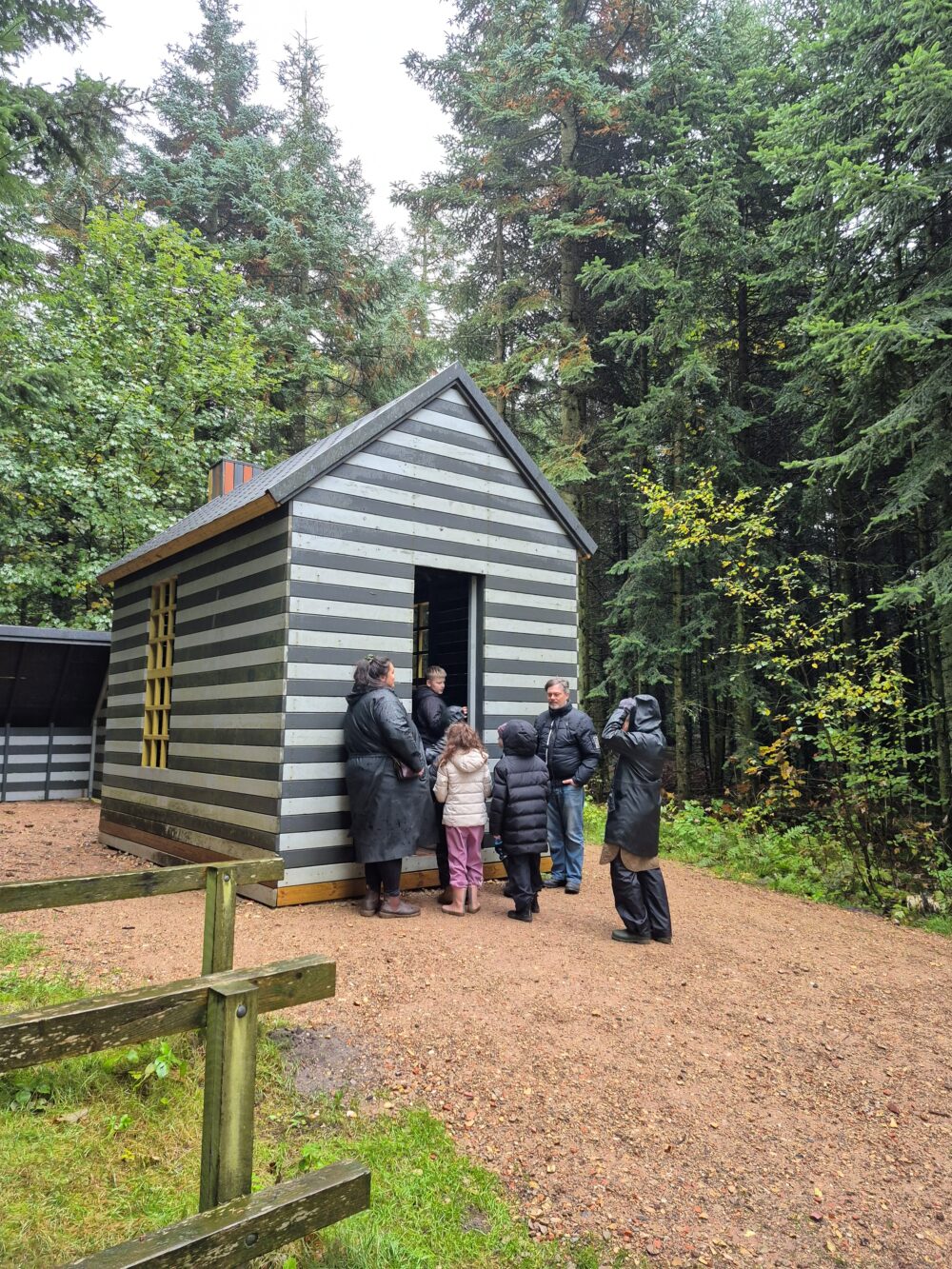
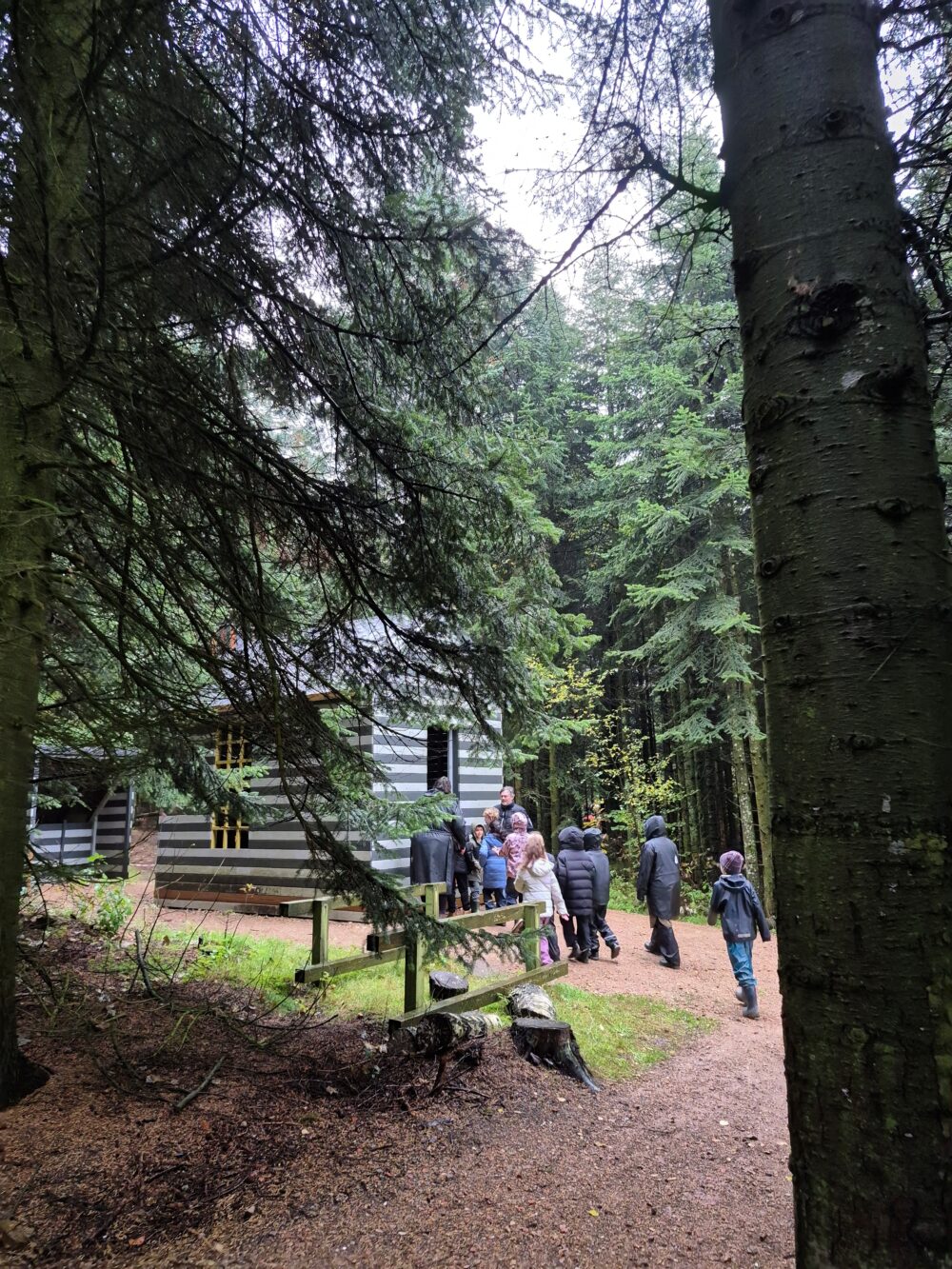
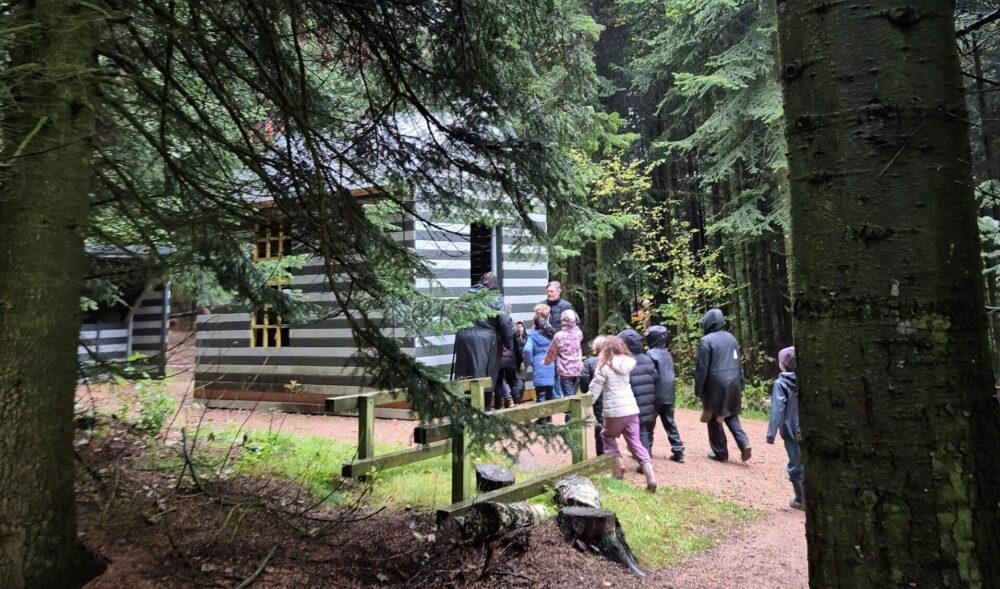
At Deep Forest Art Land, you visited an artistic interpretation of Thoreau’s cabin, created by Søren Taaning and built by MONSTRUM.
The cabin has the same dimensions as Thoreau’s original cabin, but is designed as a reinterpretation. It serves as a convergence of art, nature, and philosophy, inviting reflection on what is necessary to live well.
Back to the Forest
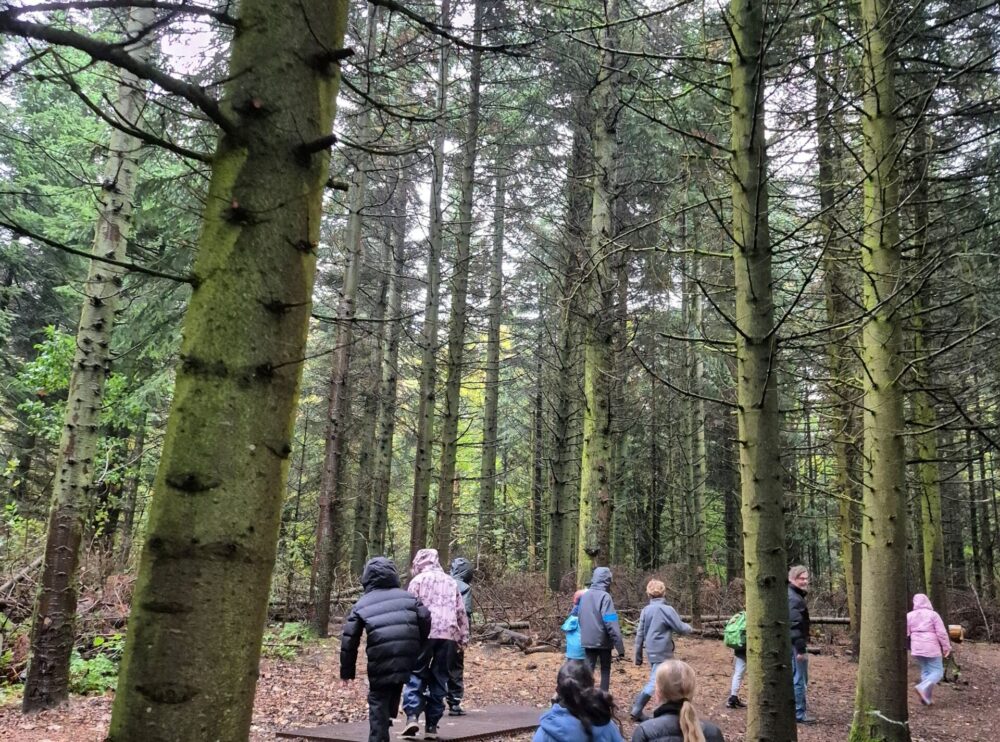
Start by reflecting on your experience in the forest.
The students are talking in pairs about
• what they remember
• what they noticed
• what it was like to be there.
Wrap up the class session and have the students share their experiences.
Revisit the story of Thoreau, who moved out into the woods.
What's important?
In this exercise, students explore what is important to them. There is no single correct answer.
Students make choices, explain their reasoning, and listen to one another—and discover that their choices may differ.
Along the way, the exercise serves as a shared barometer:
What do we prioritize?
And why?
Story
Start by establishing a shared understanding:
Ask the students to settle down.
You can sit with your eyes closed if that makes sense.
Read aloud:
Imagine that you're walking into the forest.
You move farther and farther into the woods.The ground changes beneath your feet.
The sounds are different.
The air feels different.There's a small cabin right in front of you.
Now imagine having to live there.
All by yourself.
For a whole month.There is no electricity in the cabin.
No screens.You have enough food.
But you'll have to figure out everything else on your own.
What do you need?
And how do you plan to live there?
Barometer Maps
Each student is given a sheet with the 12 cards in front of them.
Go through the cards together.
Talk about what they represent and how they can be used in daily life at the cabin.
A blanket can keep you warm.
An axe can be used to chop firewood.
Matches can be used to start a fire.
A photograph can be something you look at when you miss someone.
A musical instrument can be used to make music and keep yourself company.
Along the way, it's important to ask:
• Why might that particular item be important to bring along?
Have the students think about what they themselves would need if they were to live alone in the cabin.
The question mark allows you to add something that is important to you.
In grades 0–2, students work on choosing, describing, and creating their own solutions.
In grades 3–5, students continue to work on setting priorities, negotiating, and reaching agreements together.
Choose the track that's right for your class.
Grades 0–2
Choose what's most important
The students cut out the cards.
Individually, they choose the three they think are most important to bring to the cabin. They keep the other cards for later.
Ask the students to consider:
- What is most important to me?
- What would I miss?
- What makes me feel safe or happy.
Feel free to remind them that there isn't just one right answer.
Talk to each other
The students are paired up.
They take turns showing their cards and explaining why they chose them.
Ask them to pay attention to:
- Did we choose different things? Did we choose the same thing?
Select more
Each student receives a handout featuring Thoreau’s *Walden*.
Now they must individually choose three additional cards that represent something they would like to bring to the cabin.
Once again, they need to think about why.
Once they have made their selection, they must glue all 6 cards onto the worksheet featuring Thoeraus Hytte.
Support students in sticking to their own choices.
They can color in Thoreau's cabin while their classmates finish their work.
Group Discussion
Now the class will review what they've learned.
Ask:
- What are some common themes among several people?
- What's the difference?
Feel free to have them share with the class why they chose those 6 cards.
As a class, you can choose 6 cards together and draw or write them on the board.
Talk it over
- What do you need to get by?
- What makes it nice to be out in the woods?
- Is there anything you could do without?
- Is there anything you'd be sad not to have?
- Is it the same for everyone?
In Conclusion
The students can finish coloring the drawings, hang them up in the classroom as a shared memory, or take them home.
3rd–5th grade
Choose what's most important
The students cut out the cards.
Each of them chooses six cards that they think are most important to bring to the cabin.
Give the students time to think things over.
Ask them to consider:
- What is most important to me?
- What would I miss?
- What could I do without?
Talk to each other
The students work together in pairs.
They show each other their choices and explain why they chose those particular cards.
Make a barometer
Together, the two partners create a shared barometer.
They arrange the cards in order from most important to least important.
The most important card is at the top.
The students must reach an agreement along the way and explain the reasoning behind their choices.
• Was there anything you disagreed on?
Agree as a group
Two pairs of students are combined to form a group of six students.
The groups present their barometers to each other.
After that, the group creates a single, shared barometer.
They rearrange the cards and agree on the order of priority.
Set it up
The groups are given a piece of cardboard.
Cut the cardboard into three strips lengthwise, tape them together to form a long sheet, and glue the cards onto it in order—the most important one at the top, followed by the others in descending order.
Hang the barometers in the classroom.
The students walk around and look at each other's priorities.
Group Discussion
Use the group barometers and questions as a guide, and feel free to add your own questions as they come up during the discussion. Be sure to give the students time to discuss each question with a partner before bringing it to the whole class.
Talk about similarities and differences:
- Was it one thing at the top—but something else at the bottom?
- Is there anything that everyone or most people have made a high priority?
Ask them about their choices:
- What did you come up with for the blank card with the question mark?
- Was there anything you disagreed on?
- What do you need to get by?
- What makes life good?
- How can something like coziness or entertainment be just as important as food and warmth?
Conclusion
- What is a good life—for you?
- Can you ever have enough? Or will you always want more?
- When is enough enough?
Thanks for this time
We appreciate your engand and hope you’ll want to visit us again at Deep Forest Art Land.