The Gothic Quarter
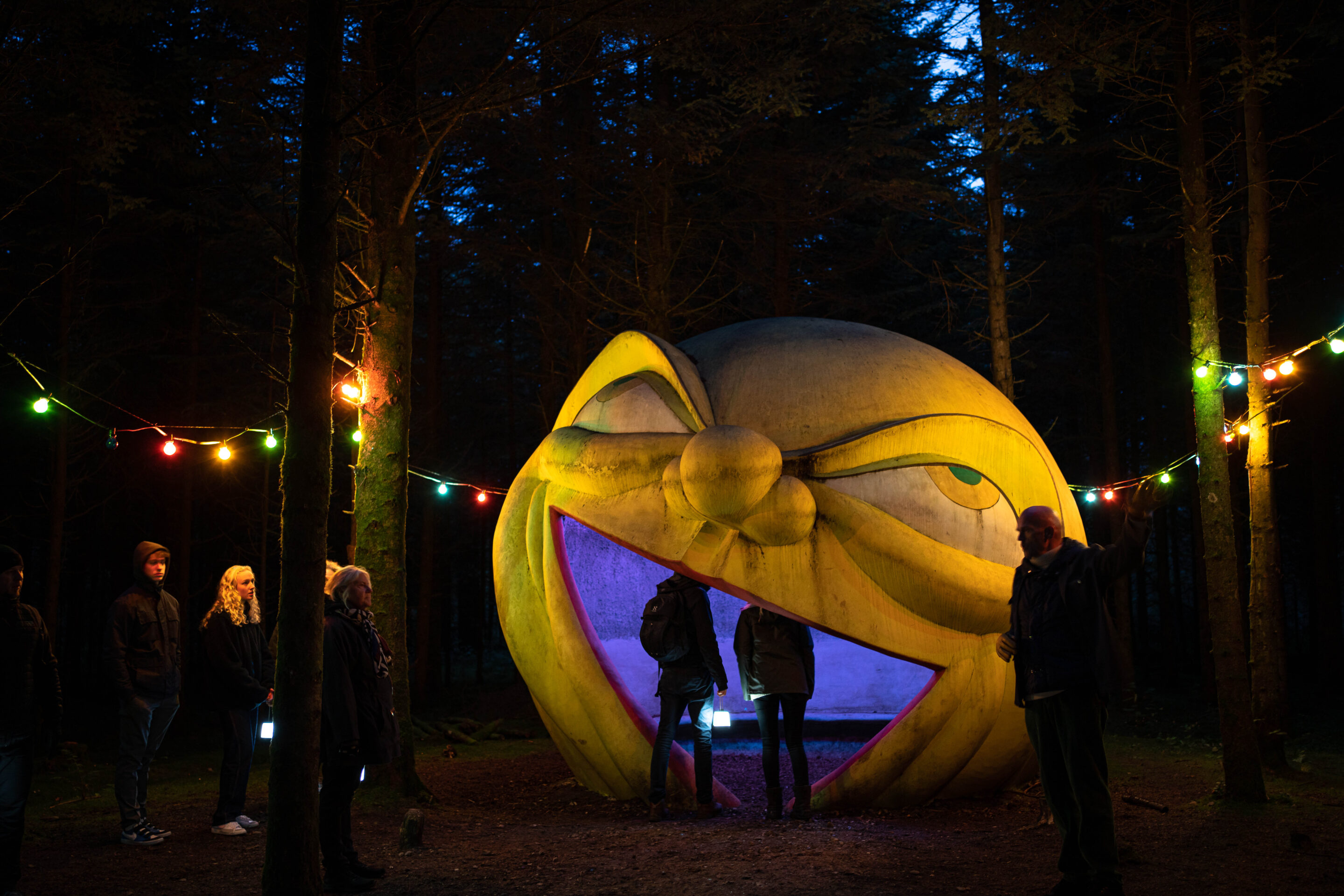
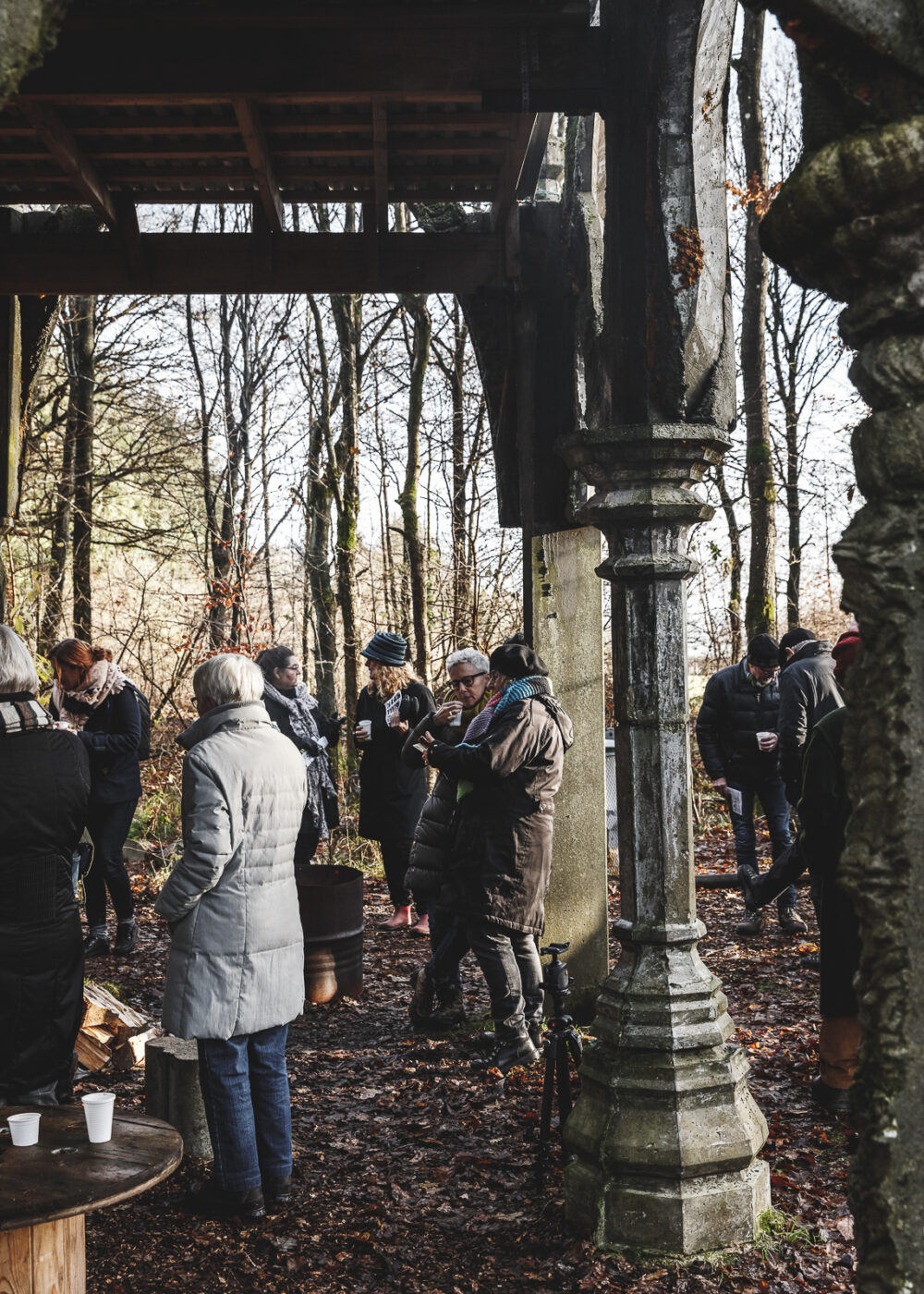
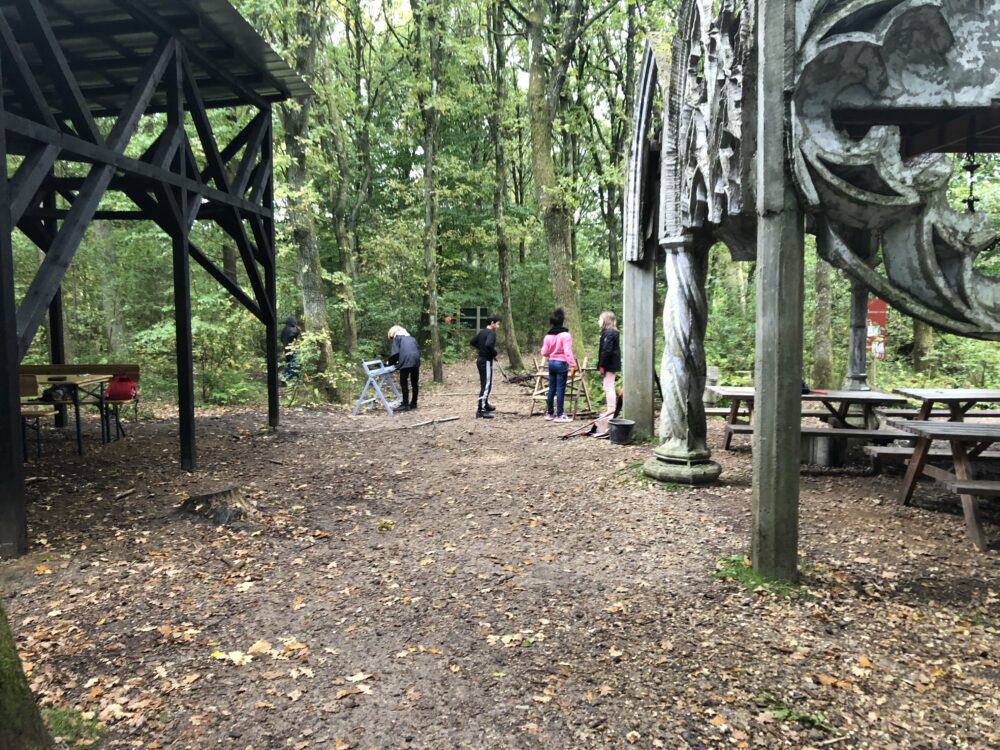
The Gothic Quarter lies halfway along the route. Here you’ll find tables, benches, shelter, and plenty of space to take a break during your visit. Some people eat their packed lunches. Others rest their legs or gather for a cup of coffee and a chat. Many school groups, families, and other groups use the area as a meeting place.
Over the years, the venue has served as a setting for classes, communal meals, concerts, weddings, bonfire activities, and art experiences. But the Gothic Quarter is more than just a place to spend time.
The area has been developed as a cohesive artistic landscape where architecture, nature, and human activity intertwine.
Works
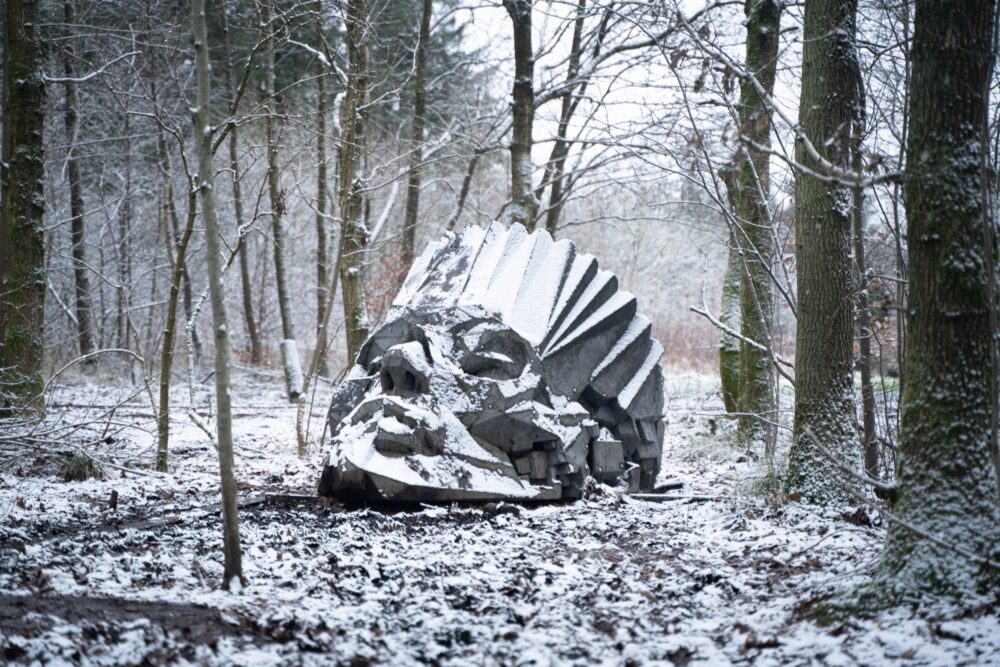
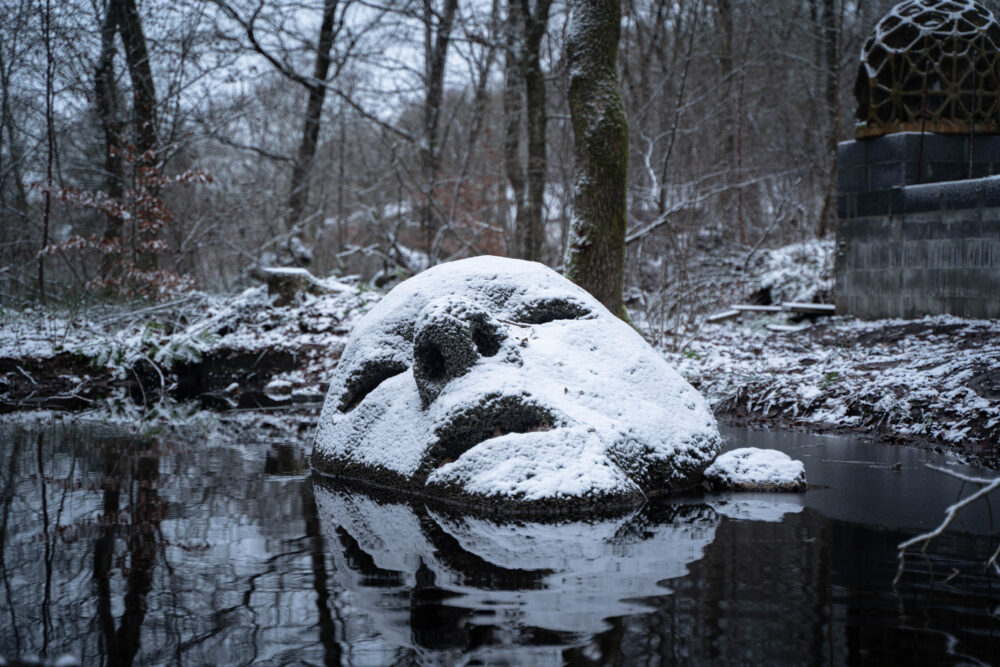
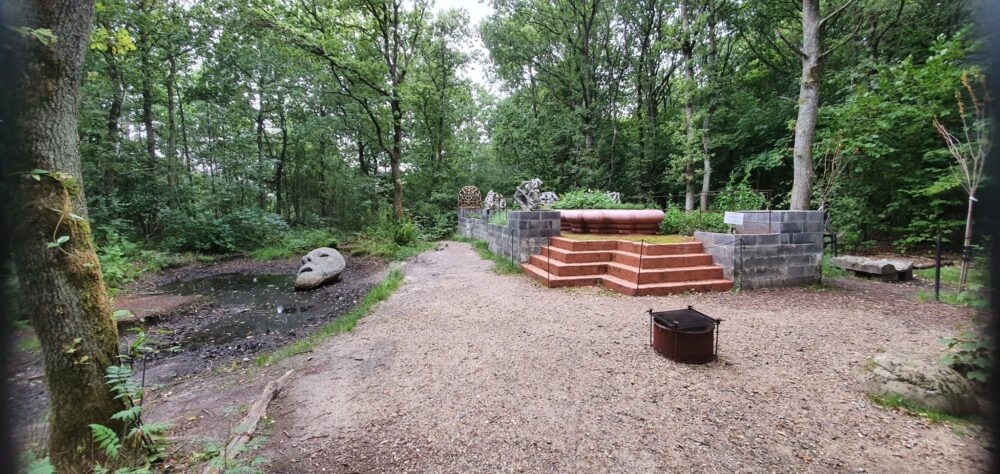
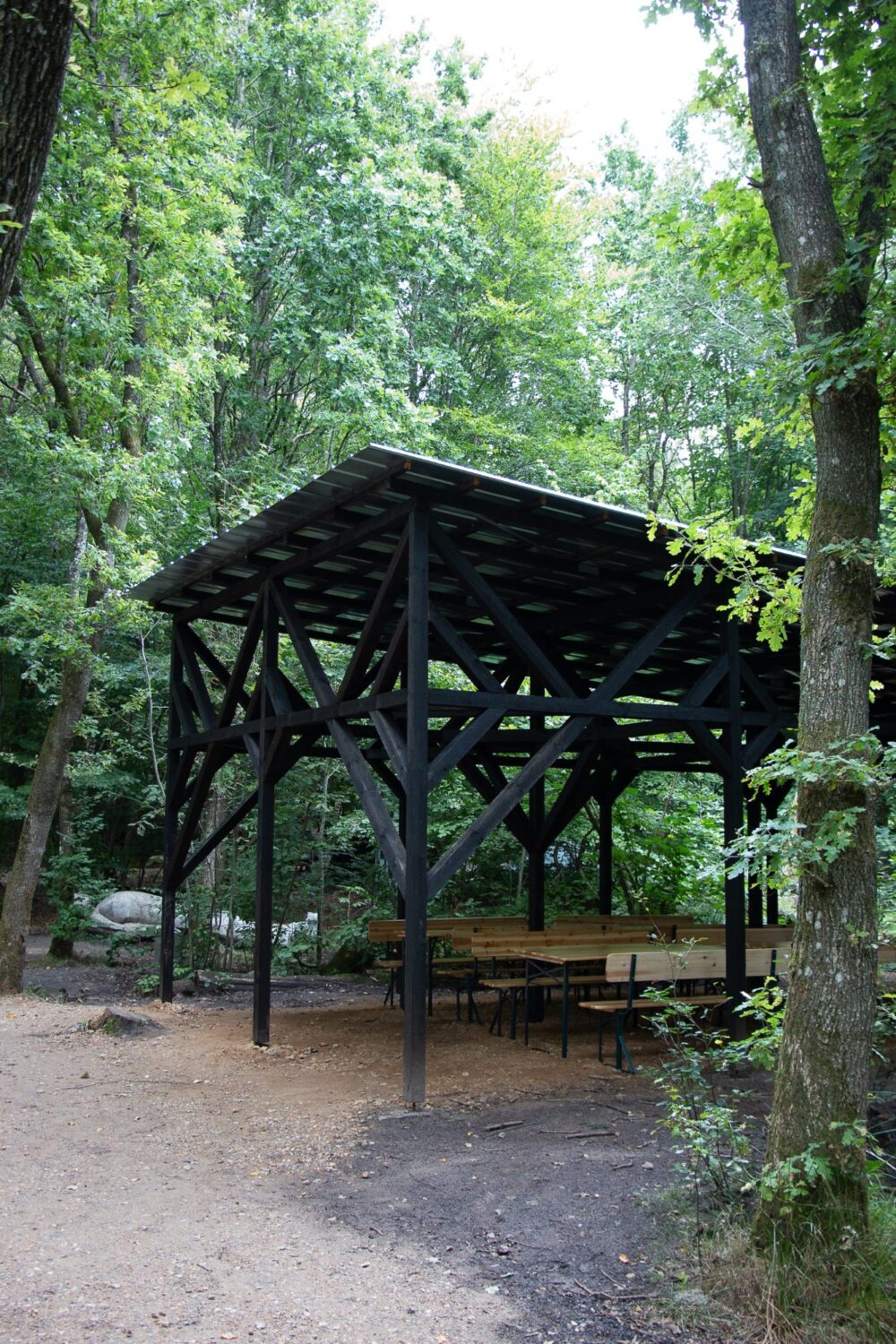
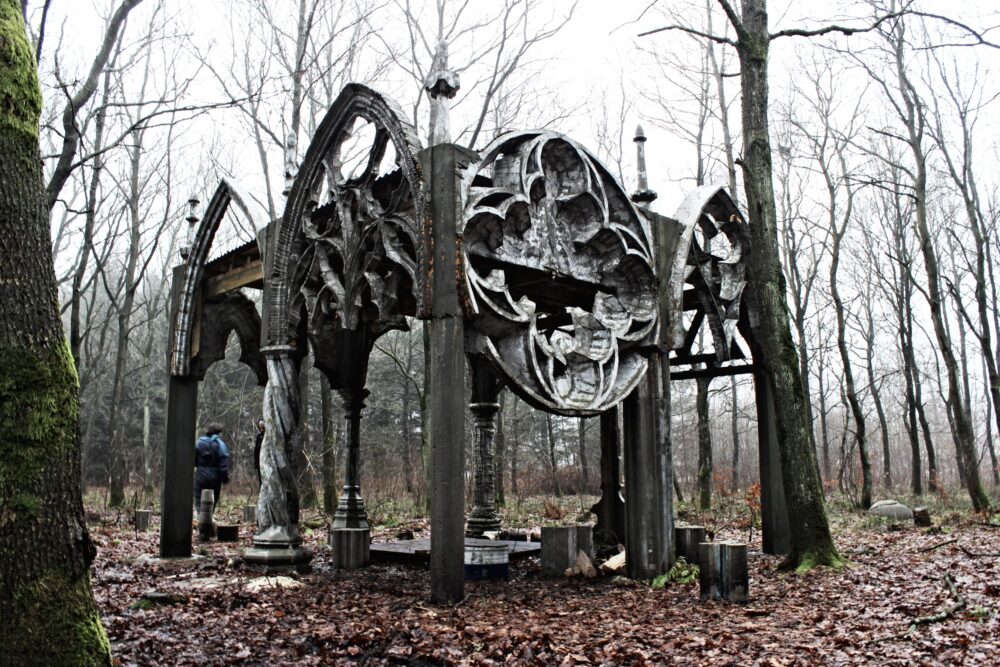
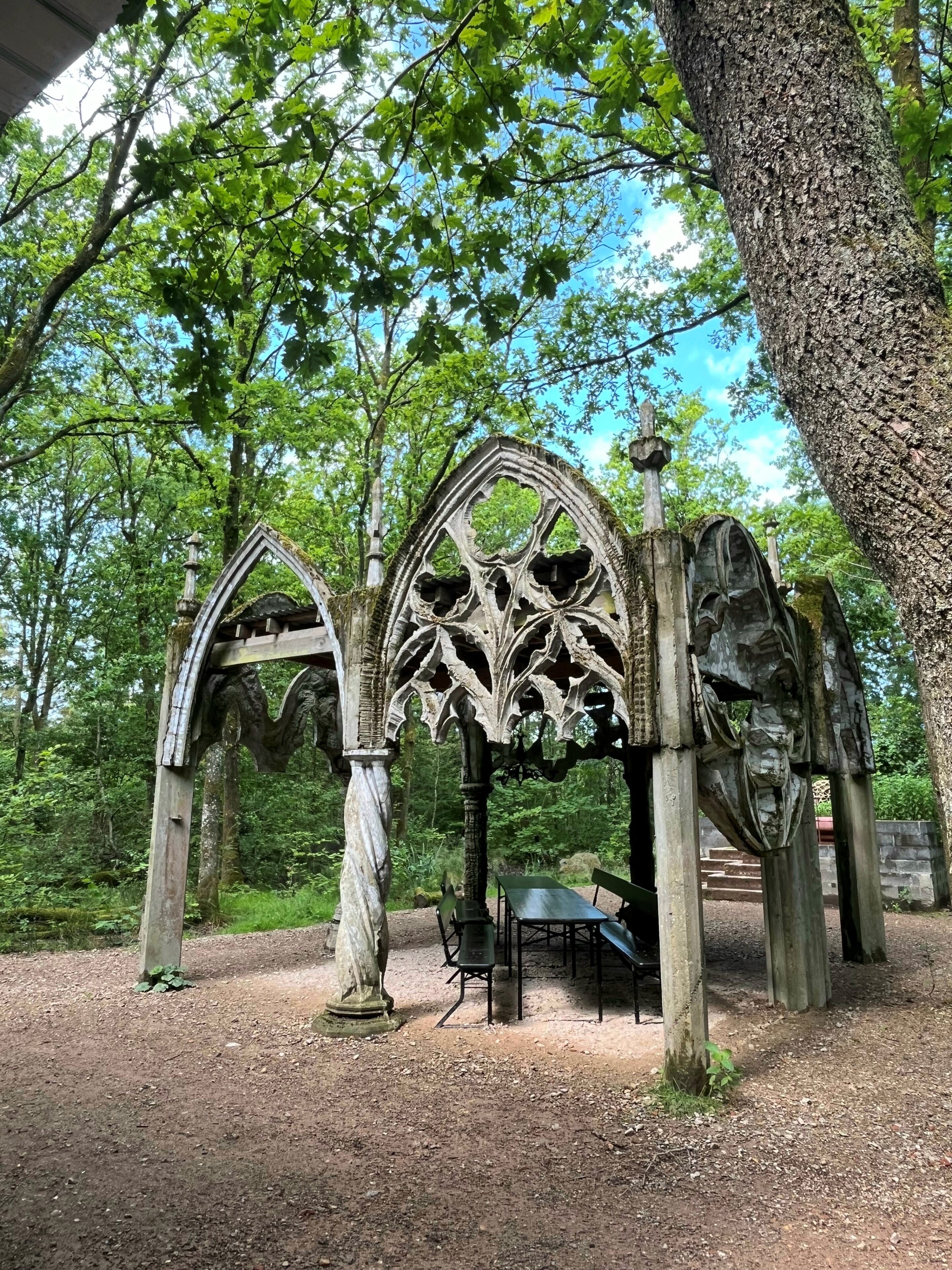
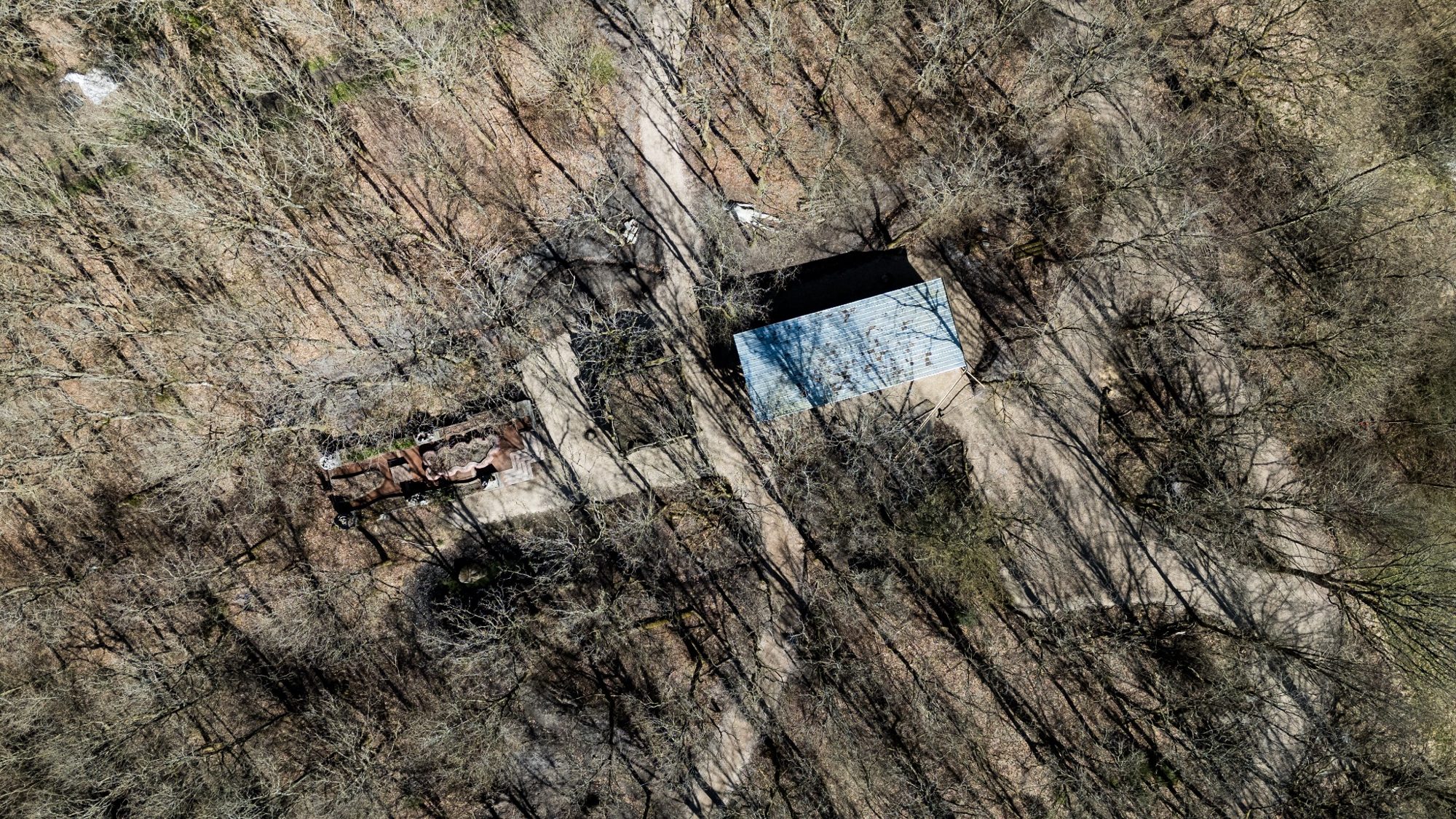
The Gothic Quarter has been developed as a unified artistic installation in which architecture, landscape, and nature form a single, cohesive whole.
This is where the Gothic Shed, the Gothic Arcade, the water feature, the herb garden, and the surrounding landscape spaces come together.
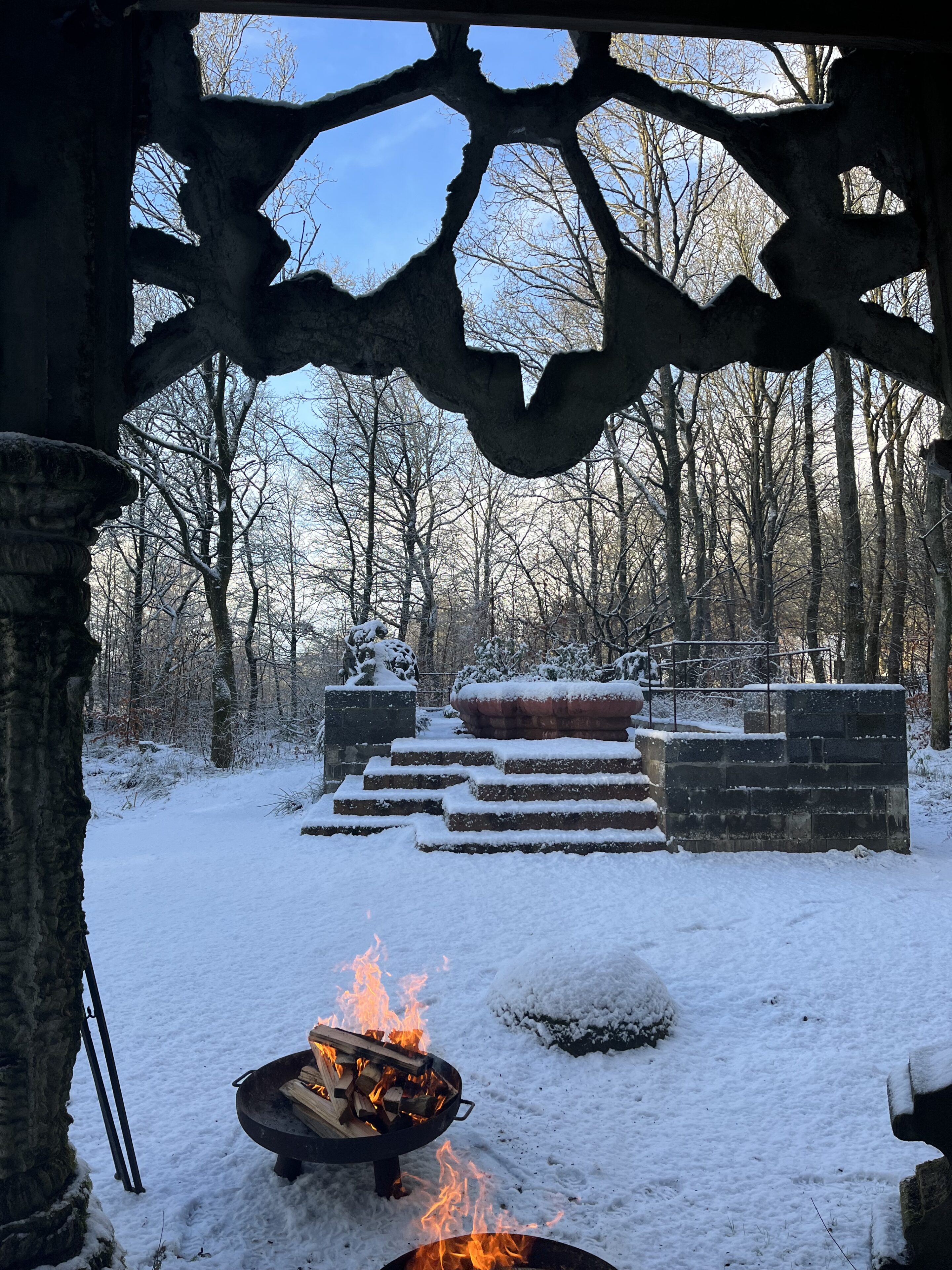
The Gothic Quarter is not intended to be a finished work.
New connections are constantly emerging between art, landscape, and the experience of being there, and the area evolves in step with nature and the people who use it.
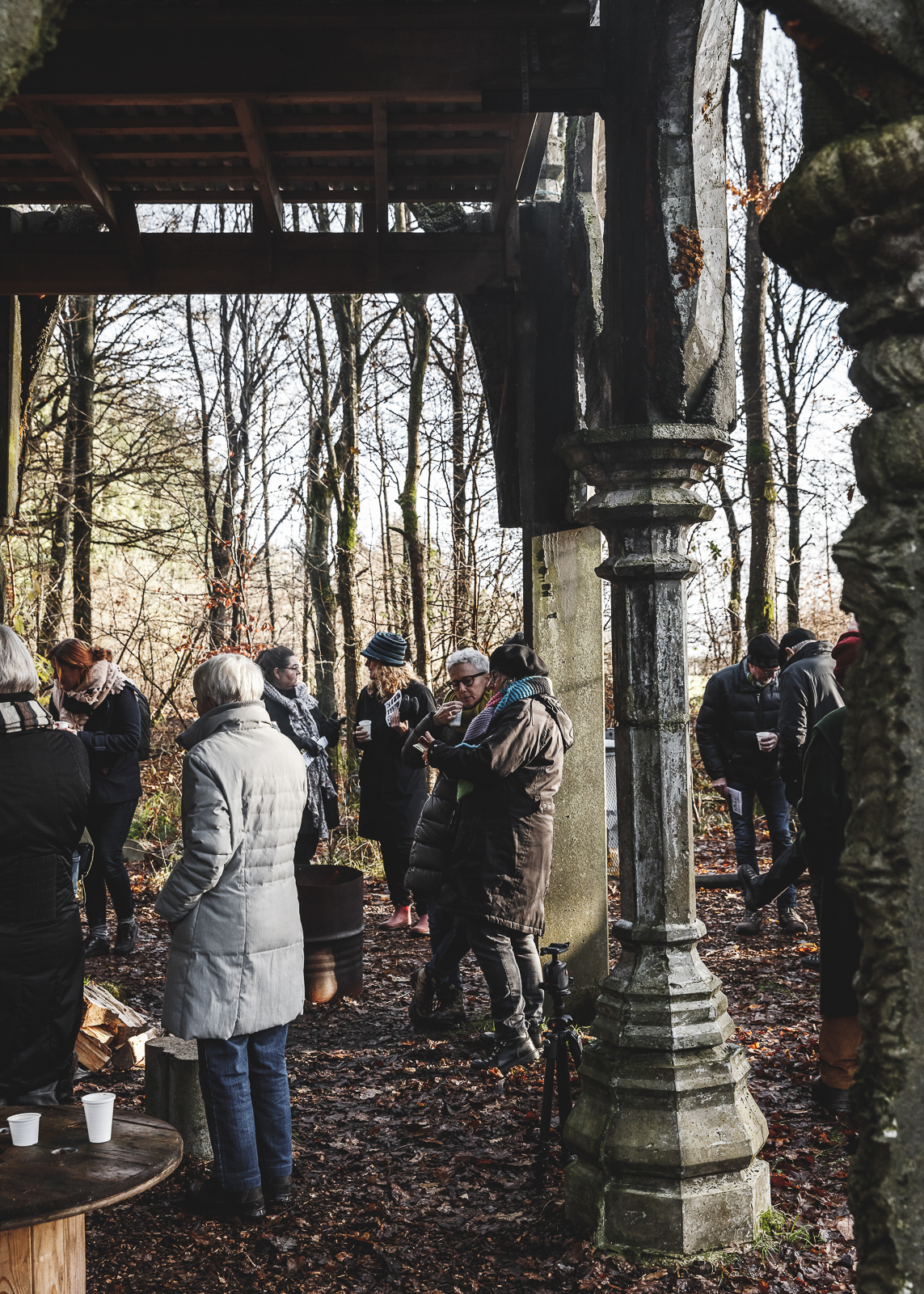
The weather, the seasons, plants, and water all help shape the experience.
Here, nature is not merely a backdrop for art, but an active part of the place.
A ruin—a gathering place
The Gothic Shed was built during Deep Forest Art Land’s first year as a place for visitors to stay and engage with the forest.
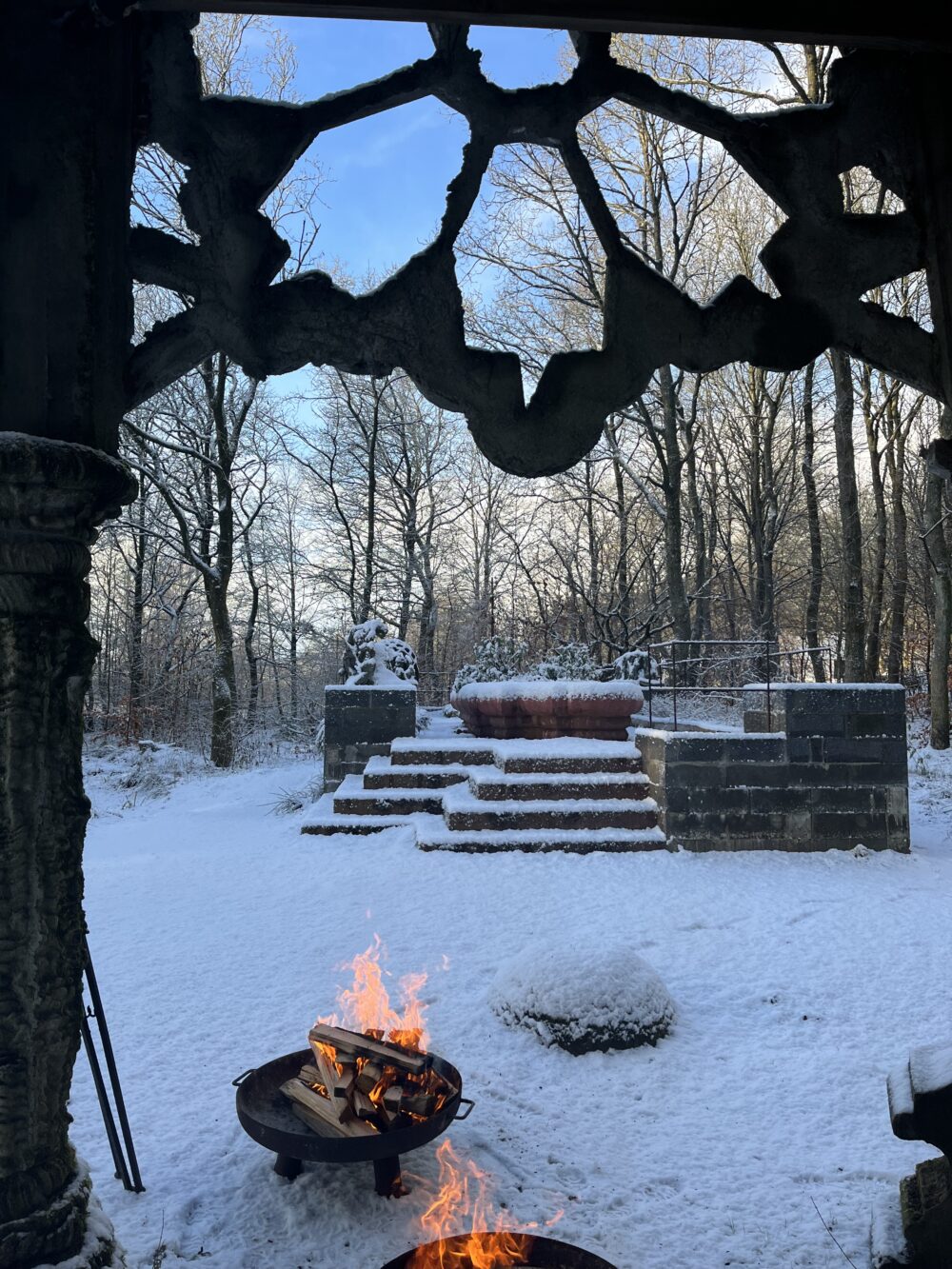
At the same time, the shed was conceived as a functional ruin—a place with a fictional historical heritage that could forge connections between nature, architecture, and time.
The inspiration comes, among other things, from Gothic cathedral architecture, where the forms and structures of nature were translated into architecture that reached toward the light.
Today, the area serves as one of the most popular gathering spots in Deep Forest Art Land.
An Area in Transition
Historic cathedrals were built over generations.
New spaces were added, functions changed, and the buildings grew along with the people who used them.
That idea lives on in the Gothic Quarter.
The area is gradually evolving through new connections between art, landscape, and public spaces.
The waterhole, the herb garden, the campfire, and the surrounding landscape all highlight the relationship between people and nature.
Among other things, the area draws on the idea of the garden as a place for cultivation, reflection, and community.
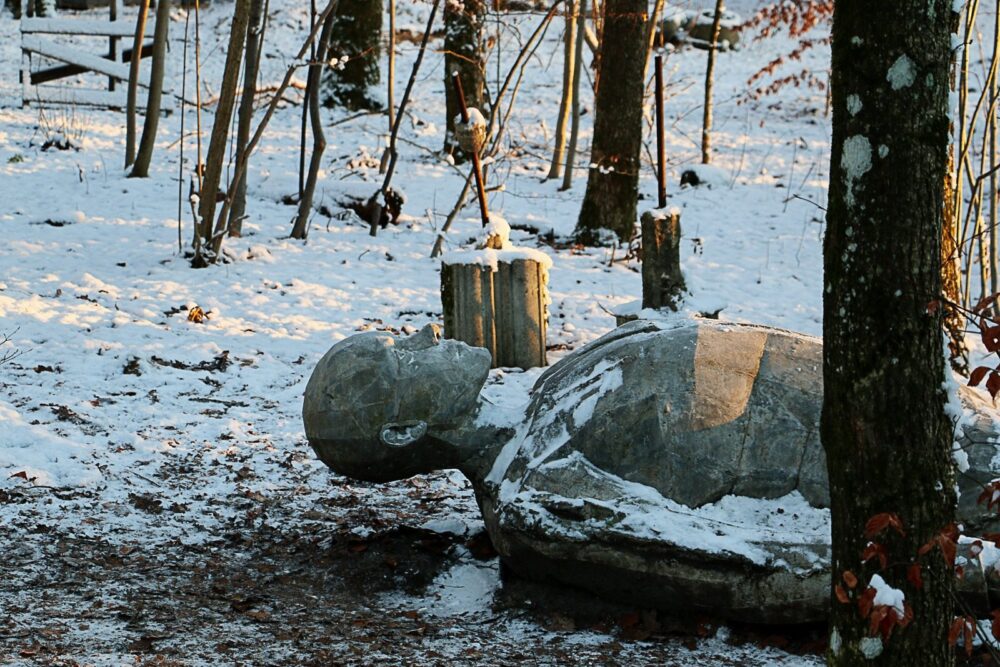
Here, nature and culture are not seen as opposites, but as elements that constantly influence one another.